Play Therapy
Because play is a child’s first language
has a way of helping children say things
without having to find all the right words first. Because asking a child to sit down, make eye contact, and calmly explain the complicated emotional experience happening inside their brain is a pretty big request when some adults still can’t decide what they want for dinner.
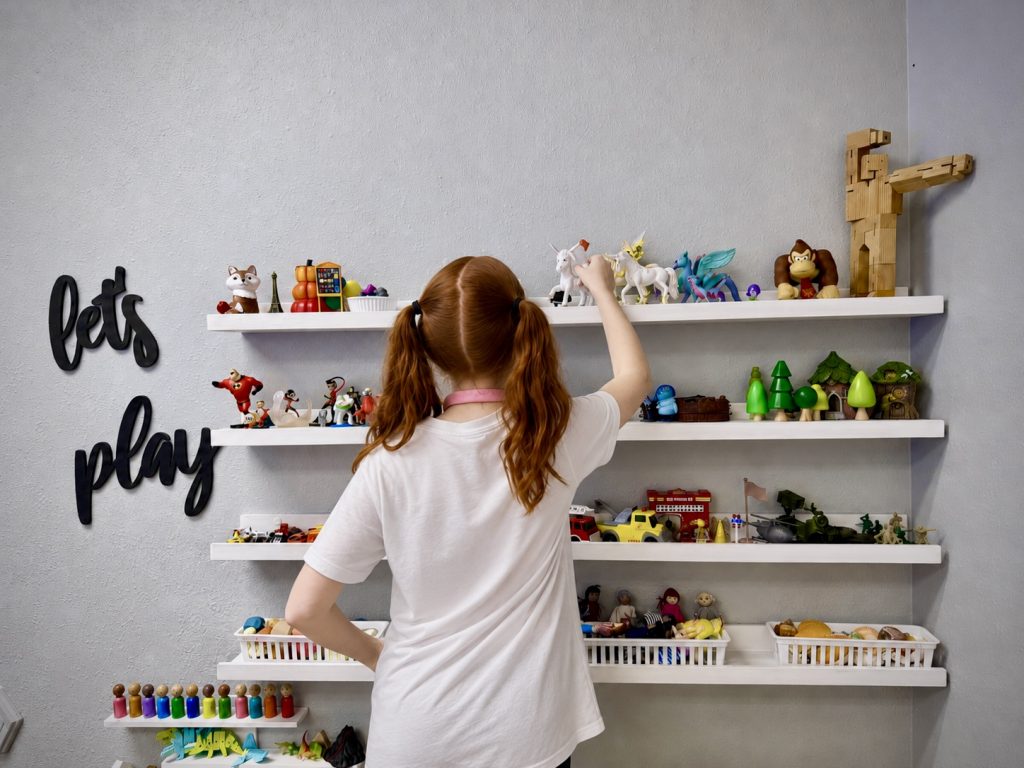
Children naturally use play to explore their world, work through experiences, express feelings, and make sense of things they may not fully understand yet. A child may build a tiny world in the sand, care for an animal who is scared, or send a dinosaur on a very dramatic rampage through the playroom. From the outside, it may simply look like play. But inside that play, there can be stories, feelings, questions, worries, strengths, and important pieces of a child’s emotional world.
That is where play therapy comes in.
I offer children a space where they can communicate in ways that feel natural to them. They don’t have to arrive knowing exactly what’s wrong, why they feel the way they do, or how to explain it. They can begin exactly where they are.
without having to find all the right words first. Because asking a child to sit down, make eye contact, and calmly explain the complicated emotional experience happening inside their brain is a pretty big request when some adults still can’t decide what they want for dinner.
Children naturally use play to explore their world, work through experiences, express feelings, and make sense of things they may not fully understand yet. A child may build a tiny world in the sand, care for an animal who is scared, or send a dinosaur on a very dramatic rampage through the playroom. From the outside, it may simply look like play. But inside that play, there can be stories, feelings, questions, worries, strengths, and important pieces of a child’s emotional world.
That is where play therapy comes in.
I offer children a space where they can communicate in ways that feel natural to them. They don’t have to arrive knowing exactly what’s wrong, why they feel the way they do, or how to explain it. They can begin exactly where they are.
What can
help with?


Every child is different and no two therapy journeys look exactly alike. Play therapy can support children experiencing a wide range of emotional, behavioral, developmental, and life challenges.
Worries can feel enormous when a child does not yet have the words or tools to manage them. Through play, children can explore fears, build coping skills, and practice feeling safer and more confident.
Big feelings can be overwhelming, especially when children are still learning how to understand and express them. Play therapy helps children recognize emotions, practice coping skills, and find healthier ways to respond.
Difficult experiences can affect children even when they cannot explain exactly what happened or how they feel. Play provides a safe way to process experiences, express emotions, and begin rebuilding a sense of safety and control.
Children experience grief in their own unique ways, and their feelings may appear through behavior, questions, silence, or play. Therapy gives them space to express those emotions and make sense of change at their own pace.
Changes at home can bring confusion, sadness, anger, worry, or divided loyalties. Play therapy gives children a safe space to explore those feelings, adjust to change, and feel heard without having to choose sides.
Challenges at school can affect confidence, friendships, behavior, and how children see themselves. Through play, children can work through frustrations, practice problem-solving, and develop skills for handling difficult situations.
Children who struggle with self-esteem may doubt themselves, avoid challenges, or become highly sensitive to mistakes. Play therapy can help them recognize strengths, take healthy risks, and develop greater confidence in who they are.
Friendships can be complicated when children are still learning how to communicate, handle conflict, and understand social cues. Play gives them opportunities to practice these skills in a supportive and encouraging environment.
Behavior is often a child's way of communicating something they cannot yet explain with words. Together, we can look beneath the behavior, understand what may be driving it, and help children develop healthier ways to express their needs.
Every child is different and no two therapy journeys look exactly alike. Play therapy can support children experiencing a wide range of emotional, behavioral, developmental, and life challenges.
Worries can feel enormous when a child does not yet have the words or tools to manage them. Through play, children can explore fears, build coping skills, and practice feeling safer and more confident.
Big feelings can be overwhelming, especially when children are still learning how to understand and express them. Play therapy helps children recognize emotions, practice coping skills, and find healthier ways to respond.
Difficult experiences can affect children even when they cannot explain exactly what happened or how they feel. Play provides a safe way to process experiences, express emotions, and begin rebuilding a sense of safety and control.
Children experience grief in their own unique ways, and their feelings may appear through behavior, questions, silence, or play. Therapy gives them space to express those emotions and make sense of change at their own pace.
Changes at home can bring confusion, sadness, anger, worry, or divided loyalties. Play therapy gives children a safe space to explore those feelings, adjust to change, and feel heard without having to choose sides.
Challenges at school can affect confidence, friendships, behavior, and how children see themselves. Through play, children can work through frustrations, practice problem-solving, and develop skills for handling difficult situations.
Children who struggle with self-esteem may doubt themselves, avoid challenges, or become highly sensitive to mistakes. Play therapy can help them recognize strengths, take healthy risks, and develop greater confidence in who they are.
Friendships can be complicated when children are still learning how to communicate, handle conflict, and understand social cues. Play gives them opportunities to practice these skills in a supportive and encouraging environment.
Behavior is often a child's way of communicating something they cannot yet explain with words. Together, we can look beneath the behavior, understand what may be driving it, and help children develop healthier ways to express their needs.
The goal is not to create a “perfectly behaved child.” The goal is to help children better understand themselves, build healthy coping skills, and feel more confident navigating their world.
Play therapy is not about keeping children entertained while hoping something therapeutic happens along the way. It’s an intentional approach that meets children at their developmental level and gives them meaningful ways to express, explore and grow.
As a Registered Play Therapist (RPT), I use Child-Centered Play Therapy and other creative, developmentally appropriate approaches based on each child’s individual needs, personality, comfort level and pace.
Some children talk while they play. Some barely talk at all. Some create careful stories filled with heroes and helpers. Others build something, knock it down, change their minds, and start over. There’s no right way to use the playroom because there’s no right way to be a child.
The goal is not to create a “perfectly behaved child.” The goal is to help children better understand themselves, build healthy coping skills, and feel more confident navigating their world.
Play therapy is not about keeping children entertained while hoping something therapeutic happens along the way. It’s an intentional approach that meets children at their developmental level and gives them meaningful ways to express, explore and grow.
As a Registered Play Therapist (RPT), I use Child-Centered Play Therapy and other creative, developmentally appropriate approaches based on each child’s individual needs, personality, comfort level and pace.
Some children talk while they play. Some barely talk at all. Some create careful stories filled with heroes and helpers. Others build something, knock it down, change their minds, and start over. There’s no right way to use the playroom because there’s no right way to be a child.
A space made for perfect kids
real kids
Your child doesn’t need to be especially talkative, creative, outgoing, calm or good at sitting still to participate in play therapy. Instead of adapting the children to work with the same clinical approach other therapists apply I instead adapt my own approach to the child who walks into the room.
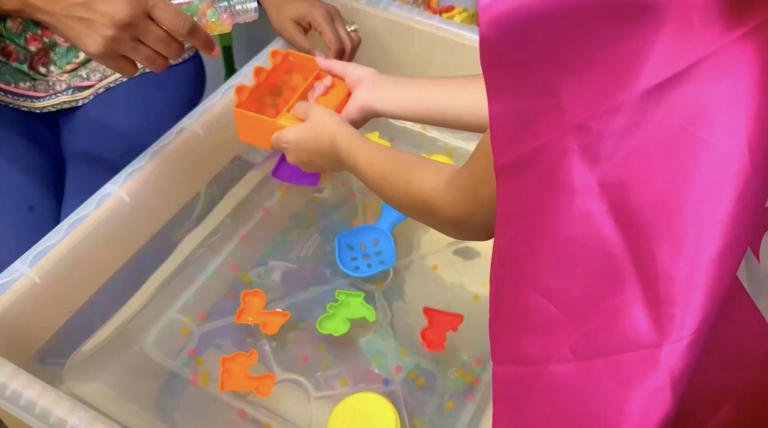
Depending on your child’s needs, our work may include imaginative play, expressive arts, sandtray and water play, or nature-based experiences. Some children are drawn to movement and sensory exploration. Others feel most comfortable creating stories, building worlds, or simply having a consistent place where they can be themselves without having to perform.
My goal is not to force a child to talk before they are ready or push them toward some predetermined version of who they are supposed to become. I want to understand their world, recognize their strengths, and help them develop the confidence and emotional tools they need to move through hard things while remaining wonderfully, imperfectly themselves.

Growth does not always arrive with flashing lights and a dramatic movie soundtrack. Sometimes the biggest changes show up quietly.
- It may look like a child asking for help instead of shutting down.
- It may look like recovering from disappointment a little faster, feeling more confident at school, or reconnecting with the people they love.
- It may be fewer emotional explosions, more moments of calm, or a child beginning to recognize what is happening inside their own body before everything becomes too much.
Progress is personal. It can look different for every child and it rarely moves in a perfectly straight line because children, like the rest of us, stubbornly refuse to behave like neat little graphs.
My goal is not to create a child who never feels angry, anxious, sad, frustrated, or overwhelmed. Those feelings are part of being human. I want to help children better understand themselves, build confidence in their ability to handle difficult moments, and know that big feelings do not have to control the entire story.
And here's...
Foxworth helps make the therapy space feel a little more welcoming and a lot less like one of those stiff offices where everyone looks at you strangely when you walk in with a child.
He doesn’t take notes. He doesn’t ask uncomfortable questions. He doesn’t expect eye contact. Frankly, he may be the calmest one in the room.
For some children, having a familiar friend nearby can make entering a new space feel easier. Foxworth may become part of a story, join an adventure, offer a comforting presence, or simply hang out nearby while a child gets comfortable.
He’s not there to replace the therapeutic relationship or become the focus of every session. He is simply another gentle way of helping children feel welcomed into a space created with them in mind.
And because children often understand friendship, courage, curiosity, and kindness better through experiences than words, Foxworth fits right in.
You know your child

Play therapy may center on your child, but I don’t believe parents should be left standing outside the process wondering what in the world is happening behind the playroom door.
You’re one of the most important people in your child’s life and you bring knowledge no therapist can replace. You know the little things. The patterns. The history. What happens on difficult mornings, during homework, after school, or five minutes before bedtime when everyone in the house suddenly forgets how pajamas work.
That is why I view therapy as collaborative.
While your child needs privacy and space to build a trusting therapeutic relationship, you also deserve support, communication, and opportunities to better understand your child’s emotional world. I work alongside parents to explore concerns, recognize patterns, celebrate progress, and find practical ways to support growth outside the therapy room.
Sometimes that may mean checking in about changes you are noticing. Sometimes it may involve discussing ways to respond differently during difficult moments. And sometimes it means reminding parents that raising a child is incredibly hard and not having every answer doesn’t mean you’re doing it wrong.
We work together as a team because helping a child thrive rarely happens in isolation.
Play therapy may center on your child, but I don’t believe parents should be left standing outside the process wondering what in the world is happening behind the playroom door.
You’re one of the most important people in your child’s life and you bring knowledge no therapist can replace. You know the little things. The patterns. The history. What happens on difficult mornings, during homework, after school, or five minutes before bedtime when everyone in the house suddenly forgets how pajamas work.
That is why I view therapy as collaborative.
While your child needs privacy and space to build a trusting therapeutic relationship, you also deserve support, communication, and opportunities to better understand your child’s emotional world. I work alongside parents to explore concerns, recognize patterns, celebrate progress, and find practical ways to support growth outside the therapy room.
Sometimes that may mean checking in about changes you are noticing. Sometimes it may involve discussing ways to respond differently during difficult moments. And sometimes it means reminding parents that raising a child is incredibly hard and not having every answer doesn’t mean you’re doing it wrong.
We work together as a team because helping a child thrive rarely happens in isolation.