It’s not about perfect art, it’s about being understood
When words are hard,
creativitycan speak
Children and teens do not always have the words to explain what they are feeling. Sometimes they know something is wrong, but they cannot quite name it. Sometimes they feel embarrassed, overwhelmed, guarded, or unsure where to begin. Expressive arts can give them another way to communicate.
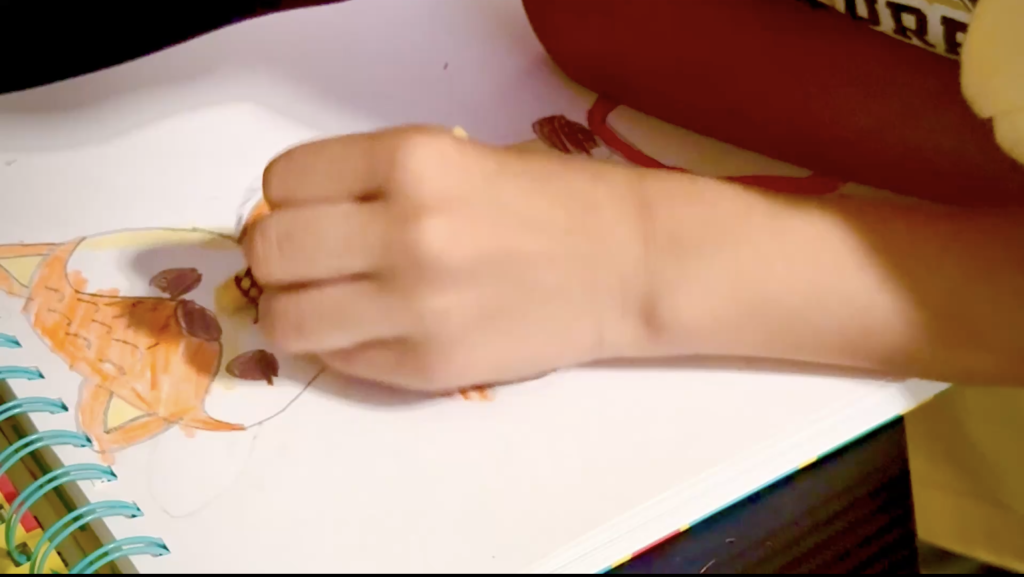
Through painting, coloring, drawing, and other creative activities, children can begin to show what they may not be ready to say out loud (backed by 2020 psychosocial research). A color, shape, line, character, or image can become a starting point for conversation, reflection, and emotional understanding. The artwork does not have to be “good,” finished, or even make sense to anyone else at first. What matters is the process.
In expressive arts therapy, creativity becomes a bridge. It can help children slow down, notice what is happening inside, and begin to share their thoughts and feelings in a way that feels safer and less pressured. For some children, drawing or painting while talking can also make therapy feel less intimidating because the focus is not only on sitting still and answering questions.
In my work with children and teens, I have seen how powerful it can be when a young person realizes they do not have to explain everything perfectly to be understood. Creative expression gives them room to explore, room to be curious, and room to communicate in a way that feels natural to them.
Big feelings
need somewhere to go
Big emotions can feel confusing for children, tweens, and teens. Anger, sadness, worry, grief, frustration, and fear can build up inside, especially when a child does not know how to talk about what they are experiencing. Expressive arts can offer a safe and structured way to give those feelings a place to go.
Painting, coloring, and drawing can help children externalize what they are feeling.
Instead of “
I'm being bad.
I'm too much.
I'm not fixable. " a child may think
“
This is my anger.
This is my worry.
This is my sadness. "
That shift can be incredibly important. When feelings become something a child can look at, describe, and explore, they often begin to feel less overwhelming (also backed by 2024 art therapy research).
Expressive arts can also help children practice emotional regulation. The rhythm of coloring, the movement of a paintbrush, or the focus involved in drawing can create a calming experience. These activities can support children as they learn to slow their bodies down, organize their thoughts, and reconnect with a sense of control.
This does not mean art magically fixes everything, because sadly we do not yet live in a world where crayons come with a “solve childhood stress” button. But creative expression can give children and teens tools for processing emotions, building self-awareness, and learning healthier ways to cope with what they are feeling.
Creativity
Opens the Door
Expressive arts therapy is not an art class. Your child does not need to be talented, artistic, or interested in making something beautiful. The goal is not to create a perfect picture. The goal is to help your child express, explore, and understand themselves in a supportive therapeutic space.
For some children, expressive arts can build confidence because it allows them to make choices, try ideas, solve problems, and create something that belongs to them. For others, it can help them feel seen when words are not enough. A drawing can become a story. A painting can become a feeling. A simple coloring activity can become a moment of calm, connection, and conversation.
Creative work can also help strengthen the relationship between the child and therapist. When a child feels accepted in what they create, they often become more comfortable sharing more of themselves. That trust can open the door to deeper therapeutic work over time.
Parents often want to know what their child is thinking or feeling, especially when their child seems withdrawn, anxious, angry, or overwhelmed.
“I wish my little bud could communicate how he feels.”
Expressive arts can help children communicate those inner experiences in a way that feels less direct and less pressured. It gives them another language, one made of color, image, movement, imagination, and meaning.
At Exhilarate Mental Wellness, expressive arts may be used to support emotional expression, coping skills, self-esteem, problem-solving, and connection. Each activity is chosen with care, based on your child’s age, needs, comfort level, and therapeutic goals.
Ready to let art pave the way?
Amanda Baird
Request an appointment
Appointment info
Prescreener
Contact information
Already a client? To request an appointment, Sign In