


Tantrums can be loud, exhausting, and deeply personal, especially when your child seems to save the biggest ones for you. Most tantrums are part of growing up, but some are signals that a child needs more support than patience and consequences alone can provide.
What Does a Typical Tantrum Look Like?
A typical tantrum usually follows an understandable trigger. Your child may be tired, hungry, overstimulated, frustrated, disappointed, or angry about being told no. The reaction may still feel wildly out of proportion to the situation, but somewhere beneath the screaming, you can usually see what pushed your child over the edge.
Most developmentally typical tantrums are relatively brief. The child becomes upset, reaches an emotional peak, and eventually begins returning to their usual self. They may accept comfort, become interested in something else, or reconnect once their nervous system settles.
Tantrums are especially common during the toddler and preschool years because children are developing independence faster than they’re developing self-control. They know exactly what they want, but they don’t yet have the language, flexibility, or emotional regulation skills to handle hearing that they can’t have it.
As children get older, tantrums should generally become less frequent, less intense, and easier to recover from. That doesn’t mean a five, six or seven year old will never lose control. Older children have hard days too. What matters is whether they’re gradually gaining the ability to tolerate frustration, communicate their needs, accept limits, and recover with support.
When Are Tantrums Not Normal? 7 Signs to Look For

The Tantrums Are Getting Worse as Your Child Gets Older
Development isn’t a perfectly straight line. A child may temporarily have more outbursts during a move, the beginning of school, a divorce, the arrival of a new sibling, a loss, or another major change. A difficult season doesn’t automatically mean something is wrong.
But as children grow, we should see some progress in their ability to handle frustration. The tantrums may not disappear, but they should slowly become less frequent, less explosive, or easier to recover from.
When a school-aged child’s outbursts are becoming more intense instead of improving, it’s worth looking deeper. An older child who regularly screams, throws themselves on the floor, destroys belongings, or becomes completely unreachable over everyday limits may not simply need stricter consequences.
They may be showing you that the emotional demands of their life have exceeded the coping skills available to them.
That doesn’t make the behavior acceptable. Understanding behavior isn’t the same as excusing it. It means we stop pretending punishment alone can teach a skill the child doesn’t yet possess.
The Tantrums Happen Very Frequently or Last a Long Time
There’s no stopwatch that separates a “normal” tantrum from a concerning one. A hungry four-year-old can have one spectacularly bad afternoon without needing a mental health evaluation.
Patterns matter more than isolated episodes.
If tantrums are happening several times a day, most days of the week, or regularly lasting 20 to 30 minutes or longer, your child may be having more difficulty regulating than we’d expect for their age. This is especially important when the tantrum continues even after the original problem has been resolved.
For example, your child may initially become upset because screen time ended. Twenty-five minutes later, the tablet is no longer the real issue. Their nervous system has become stuck in a state of distress, and they don’t know how to find their way back.
At that point, asking, “Why are you still crying?” usually won’t help. Your child may not know. The emotion has moved beyond the original disappointment and taken control of the whole body.
Someone Is Regularly Getting Hurt
Some young children kick, hit, bite, or throw things during a tantrum. A single incident doesn’t automatically mean your child has a serious behavioral problem. Children sometimes act before their developing brains can apply the brakes.
But repeated aggression needs to be taken seriously.
If your child regularly punches family members, attacks siblings, bites hard enough to leave marks, destroys property, throws dangerous objects, runs into unsafe areas, or intentionally hurts themselves, the immediate priority is safety.
This is where compassion must stand beside a firm boundary.
You can understand that your child is overwhelmed while still saying, “I won’t let you hurt me,” or, “You’re allowed to be angry, but you’re not allowed to throw that.” Your child’s feelings are valid. Harmful behavior still has to be stopped.
If you’re becoming afraid of your child’s outbursts, siblings are hiding from them, or you’re physically unable to keep everyone safe, please don’t wait for the situation to become more dangerous before seeking support.

Your Child Can’t Return to Their Usual Self
A tantrum is an episode. Emotional dysregulation can become an ongoing state.
Pay attention to what happens between the explosions. Does your child eventually return to playing, talking, connecting, or participating in the day? Or do they remain irritable, tense, tearful, angry, or ready to erupt again?
Some children seem to live with their emotional alarm system turned all the way up. A small disappointment happens, and their entire body responds as though something dangerous has occurred. Even after the immediate tantrum ends, they may remain restless, guarded, or emotionally fragile for hours.
This can happen for many reasons. Anxiety, ADHD, autism, trauma, sensory differences, learning difficulties, poor sleep, family stress, and communication challenges can all affect a child’s ability to regulate. None of those possibilities can be determined from a tantrum alone, and parents shouldn’t have to diagnose their child through late-night Google searches conducted from the bathroom floor.
What you can notice is that your child seems unable to find calm, even when they desperately want to.
Ordinary Requests Lead to Extreme Distress
Every child resists things sometimes. Brushing teeth has somehow survived for centuries despite children treating it like an unconstitutional government intrusion.
Concern grows when ordinary parts of daily life repeatedly cause overwhelming reactions.
Getting dressed, leaving the house, turning off a screen, sitting down for dinner, beginning homework, going to school, or moving from one activity to another shouldn’t consistently bring the entire household to a standstill.
A child may appear controlling because they insist everything happen in one exact way. They may demand the same clothes, route, food, bedtime routine, or sequence of events. When something changes, they fall apart.
This can look like stubbornness, but sometimes control is how an anxious or overwhelmed child tries to create safety. The child isn’t necessarily thinking, “I’m going to control this family.” Their nervous system may be saying, “I don’t know what will happen next, and I can’t handle that feeling.”
Parents still need to set limits. But when every boundary becomes a war, the family may need more than another discipline technique. They may need help with emotional regulation, transitions, anxiety, or persistent power struggles.
Tantrums Are Interfering With School, Friendships, or Family Life
One of the clearest signs that a child may need additional support is that the outbursts are preventing them from participating in everyday life.
Maybe your child is frequently removed from class, sent home from school, or unable to complete normal activities. Perhaps friendships are becoming difficult because other children don’t know how to respond when your child becomes angry or overwhelmed.
At home, the entire family may begin organizing itself around avoiding the next explosion. Siblings learn not to touch certain toys. Parents stop going to restaurants, birthday parties, parks, or family gatherings. Everyone walks carefully, speaks carefully, and changes plans carefully because one unexpected disappointment could overturn the day.
I’ve spoken with parents from Wesley Chapel, Temple Terrace, and throughout the Tampa area who initially believed they simply needed to become more patient. Patience certainly matters, but patience can’t solve every underlying problem.
When a child’s emotional reactions begin shrinking the family’s world, it’s time to look for support.
The Tantrum Looks More Like Panic Than Anger
Not every tantrum is driven by anger.
Sometimes the child looks frightened. They may cling, beg, hide, freeze, cover their ears, struggle to breathe normally, or become frantic when separated from a parent. They may complain of stomachaches before school, panic when plans change, or become inconsolable over worries that seem small to adults.
A child experiencing anxiety doesn’t always look nervous or timid. Anxiety can look like irritability, refusal, arguing, aggression, perfectionism, or an intense need to control what happens next.
This is one reason parents may search for a therapist for child anxiety only after months of believing they were dealing with defiance. The behavior looked angry on the surface, but fear was underneath it the entire time.
There’s an important truth here: children don’t always understand what they’re feeling well enough to explain it. Asking, “What are you anxious about?” may get you a shrug, an angry “nothing,” or another outburst.
That doesn’t mean there’s nothing happening inside.
It means your child may need another way to show you.
What Should Parents Do During a Tantrum?
When a child is fully overwhelmed, the goal isn’t to deliver a perfect speech. The goal is to create safety, reduce stimulation, and help the child move through the emotion without allowing harmful behavior.
Use fewer words. A dysregulated child usually can’t absorb a lecture, consider your logic, or reflect meaningfully on consequences. The more you talk, the more overwhelmed they may become.
Keep your message simple and steady:
“You’re angry that it’s time to leave. I won’t let you hit me. I’m here while you calm down.”
That sentence contains both compassion and structure. Your child’s emotion is acknowledged, the boundary remains firm, and the relationship stays intact.
You don’t have to give in to end the tantrum. In fact, repeatedly changing a limit after screaming begins can accidentally teach a child that escalation is the final stage of negotiation. But holding a boundary doesn’t require yelling, threatening, humiliating, or emotionally abandoning them.
Your child doesn’t need you to win the argument. They need you to remain the adult while their ability to manage the moment has temporarily left the building.
Once your child is calm, reconnect before trying to teach. You might say:
“That was really hard. You were angry when we had to leave. Next time, we’re going to practice walking to the car without hitting.”
Accountability belongs after regulation, not in place of it.
When It's Time to Seek More Support
If your child’s tantrums changed suddenly, begin by talking with their pediatrician. Pain, illness, disrupted sleep, medication changes, hearing or communication difficulties, and other physical concerns can affect behavior. A child who feels bad may behave badly because they don’t know how to explain what’s happening.
Mental health support may be helpful when the pattern is severe, persistent, dangerous, or interfering with daily life. You don’t need to wait until your child has been suspended, friendships have fallen apart, or the family is in complete crisis.
When families come to my play therapy office near Tampa, they’re often no longer asking, “How do I make the tantrums stop?” They’re asking a deeper question: “What is my child trying to tell me?”
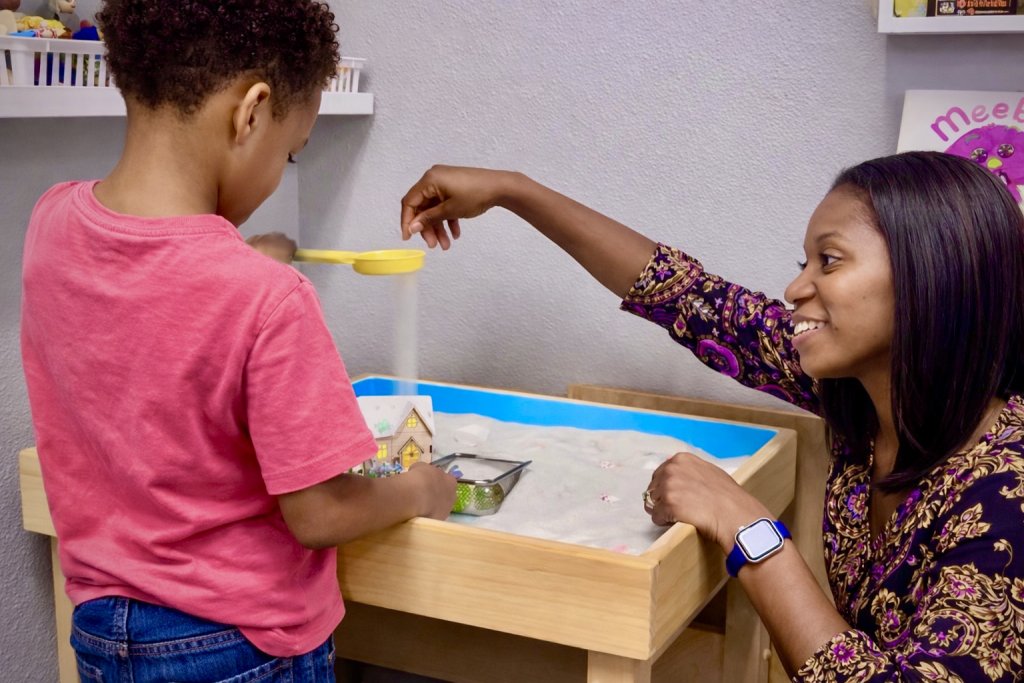
In child-centered play therapy, children can communicate through play when direct conversation feels too difficult. Through toys, stories, creative expression, and repeated themes, a child can begin showing what feels frightening, confusing, frustrating, or out of control.
Sandtray therapy may give a child a way to represent relationships, worries, conflicts, and experiences that they don’t yet have words for. Parent coaching can help caregivers recognize triggers, respond more consistently, reduce unnecessary power struggles, and support emotional regulation without giving up healthy authority.
Sometimes parents searching for a Tampa child therapist or online play therapist believe therapy will focus on identifying everything they’ve done wrong. That isn’t the purpose of the work.


