


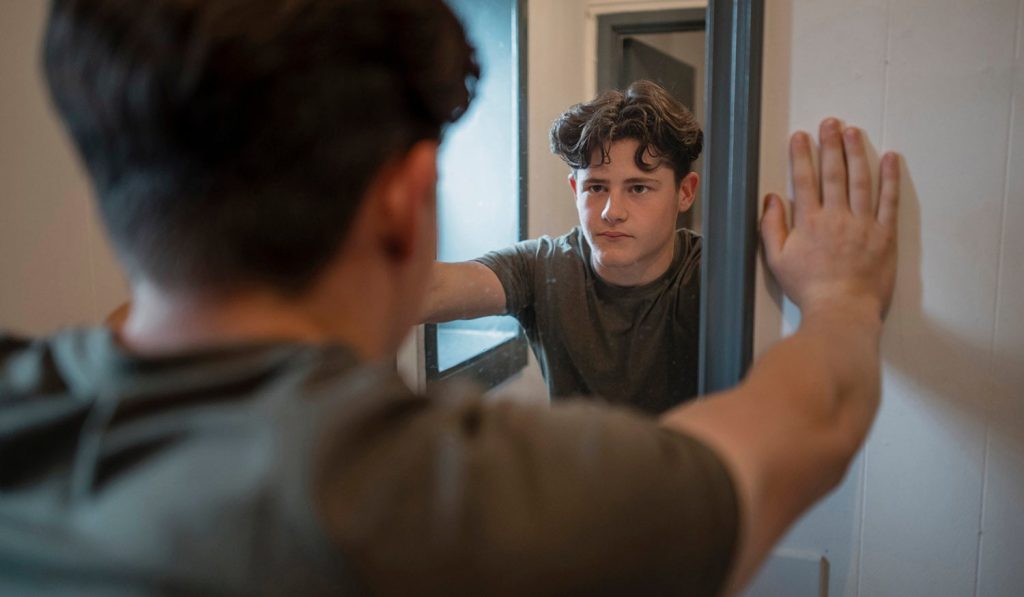
Your teen stands in front of the mirror and pulls at their shirt. They change clothes three times before school, refuse to be in pictures or stop wearing things they used to love. You tell them they look beautiful, handsome or stylish. They roll their eyes, shut the door and both of you leave the conversation feeling worse.
That moment can make a parent feel helpless. You see the child you love, but your teen sees flaws they believe the world is measuring. You want to protect them from comparison, teasing and filtered images. But reassurance alone often can’t reach a belief that has been repeated to them for months.
Body image isn’t only about whether a teen likes the way they look. It’s about how safe, acceptable and worthy they feel inside their body. A teen may become preoccupied with weight, skin, height, muscles, hair, clothing or one feature nobody else seems to notice. Some avoid mirrors. Others can’t stop checking them. Some hide beneath oversized clothes while others chase approval through selfies, exercise or constant comparison.
This is where parents have to resist the urge to make the problem disappear with one sentence. “You’re not fat” may sound reassuring, but it can accidentally confirm that being fat would be the terrible thing your teen fears. The goal isn’t to convince them that their body is flawless. The goal is to help them understand that their body doesn’t have to be flawless for them to deserve respect, care and a full life.
If you’ve been searching for how to help a teen with body image issues, begin here: don’t argue with the pain. Get curious about where it came from, notice what keeps feeding it and help your teen build an identity too large to be reduced to a reflection.
Why Body Image Can Hurt So Deeply
Adolescence is already a season of being watched. Bodies change before teens feel ready. Skin changes, weight shifts, muscles develop at different speeds and clothing starts fitting in unfamiliar ways. At the same time, peers become more important and approval begins to feel like social currency.
Then there’s the phone.
A teen can compare their ordinary Tuesday face to hundreds of edited, posed and carefully selected images before breakfast. They may know filters exist and still feel defeated by them. Knowing an image is altered doesn’t automatically stop the nervous system from registering, “Everybody looks better than I do.”
Body image can also be shaped much closer to home. A relative comments on weight. A coach praises a smaller body. A parent talks about needing to “be good” after eating dessert. Someone laughs at a person’s size on television. Nobody may be speaking directly to your teen, but your teen is still learning which bodies receive admiration and which ones are treated like warnings.
One careless sentence can become a private rule: My stomach shouldn’t look like this. My shoulders are too narrow. My skin makes me ugly. I can’t be seen until I fix myself.
This isn’t vanity. Vanity says, “Notice me.” Body shame says, “Please don’t look at me because I’m afraid you’ll see what I see.”
What to Say When Your Teen Criticizes Their Body
When your teen says, “I look disgusting,” your first instinct may be to answer, “No, you don’t.” That response comes from love, but it turns the conversation into a debate. Your teen presents pain and you present evidence. Now they feel pressure to prove how ugly, fat, weak or unacceptable they believe they are.
Try slowing the moment down instead.
You might say:
“I’m sorry you’re feeling this way about yourself today.” “That sounds painful. What happened before you started feeling worse?” “Has somebody said something about your body?” “Do you notice this feeling more at school, online or when you’re getting dressed?”
Those words don’t agree with the criticism. They show your teen that you’re willing to understand it.
Listen for what the body complaint may be carrying. “I hate my legs” may mean “The other girls wore shorts and I felt different.” “I need bigger muscles” may mean “I’m afraid people think I’m weak.” “I can’t go to the pool” may mean “Somebody took a picture of me last time and shared it.”
The body is often where a deeper fear lands.
You don’t need to conduct an investigation every time your teen looks unhappy in a mirror. Too many questions can feel like pressure. Let them know the door is open and don’t punish them emotionally for walking through it. If they finally tell you that a classmate mocked their body, this isn’t the time to say, “Why didn’t you tell me sooner?”
They’re telling you now.
What Needs to Change at Home
Helping a teen with body image issues can’t only be about changing the way they talk about themselves. Sometimes the whole household has to examine the language floating through the kitchen, bathroom and car.
Pay attention to how adults talk about their own bodies. A parent who constantly says, “I look terrible,” “I’m getting so fat” or “I can’t eat that” may unintentionally teach a teen that adulthood means remaining at war with the body. Your teen may reject everything else you say and still absorb that lesson perfectly.
That doesn’t mean you have to pretend you love every part of yourself. Teens can detect fake confidence with the precision of airport security. You can model something more honest:
“I’m not feeling confident today, but I’m not going to insult myself.” “My body has changed and I’m learning how to care for it.” “I’m choosing food that helps me feel steady, not punishing myself for what I ate.”
It also helps to move from body positivity to body neutrality. Body positivity asks someone to love how they look. Body neutrality makes room for a quieter truth: you don’t have to love every feature every day to treat your body with dignity.
A teen can dislike their stomach today and still eat lunch.
They can feel uncomfortable in pictures and still join the family.
They can wish their skin looked different and still deserve to be seen.
Be careful with appearance-based praise too. Telling your teen they’re beautiful isn’t wrong, but if most compliments focus on beauty, muscles, weight or clothing, appearance remains the scoreboard. Notice courage, humor, effort, kindness, creativity, loyalty and judgment. Help them experience themselves as a whole person instead of a body waiting to be graded.
The same principle applies to food and exercise. Try not to label food as good, bad, clean or sinful. Don’t frame movement as repayment for eating. Exercise can support mood, sleep and physical health, but it shouldn’t become a punishment for having a body.
Help Your Teen Question the Mirror They’re Using
Parents often want to solve social media by taking the phone away. Sometimes limits are necessary, especially when a teen is losing sleep or repeatedly viewing harmful content. But confiscating the device without understanding the experience can make your teen more secretive while leaving the belief untouched.
Talk about the feed itself.
Ask which accounts make them feel worse. Notice whether they’re watching constant weight-loss videos, extreme fitness content, “what I eat in a day” clips or appearance-focused before-and-after posts. Help them mute, unfollow and block content that leaves them feeling ashamed or driven to change their body through unhealthy means.
This isn’t weakness. It’s emotional hygiene.
The algorithm doesn’t know your teen’s worth. It knows what keeps their thumb moving. Fear, envy and insecurity are very effective at keeping a person on a screen.
Help your teen study what they’re seeing. How many photos were taken before one was posted? Is the lighting natural? Is the person selling a product? Has the image been filtered or reshaped? What body types never appear? What would this account lose if viewers felt comfortable with themselves?
You’re not trying to turn every scroll into a lecture on media literacy. You’re helping your teen understand that the mirror they’re using may have been built to distort them.
Real-life situations need care too. A Saturday trip from Brandon to International Plaza can become painful when nothing in the fitting room feels right. Fitting rooms are rarely known for mercy, and clothing sizes seem to be governed by several competing governments.
Don’t turn that moment into a test of character.
Offer practical support. Find clothes that fit the body your teen has today. Bring different sizes into the fitting room without announcing them like medical findings. Take a break, eat something and return later if emotions are rising. The goal isn’t to force your teen to feel confident under fluorescent lighting. The goal is to keep one difficult shopping trip from becoming evidence that their body is the enemy.
Recent Posts
Before an outing, help with emotional regulation by making a simple plan. Your teen might take slow breaths, name five things they can see or step outside with you for a few minutes. Emotional regulation means helping the body settle enough for the thinking part of the brain to come back online. It doesn’t mean pretending the emotion isn’t there.
When Body Image Becomes a Health Concern
Body dissatisfaction and an eating disorder aren’t the same thing, but body image concerns can become more serious. Watch patterns rather than waiting for one dramatic sign.
Concern may be growing if your teen begins skipping meals, cutting out entire food groups, hiding food, eating in secret, vomiting after meals, using laxatives or exercising through pain and exhaustion. You may also notice constant weighing, intense fear of weight gain, rigid food rules, guilt after eating, dizziness, fainting, rapid weight change or withdrawal from friends and activities.
A teen doesn’t have to look underweight to be medically unwell. Eating disorders and dangerous restriction can happen in bodies of every size. Please don’t let appearance reassure you when the behavior is telling you something else.
Start with your teen’s pediatrician when eating, weight or physical symptoms have changed. Medical evaluation matters because the heart, digestion, hormones, hydration and concentration can all be affected. Early support is far kinder than waiting until the problem becomes impossible to ignore.
Approach the conversation without accusation:
“I’ve noticed you’re skipping meals and getting dizzy. I’m concerned about your health, and we’re going to get support.”
That sentence names what you see, communicates care and keeps the adult in the adult role.
If your teen talks about self-harm, says they don’t want to live or appears to be in immediate danger, seek urgent professional help. Body shame can become emotionally consuming, and you don’t have to decide alone whether the situation is serious enough.
How Therapy Can Help
Sometimes a teen needs a place where they don’t have to protect a parent from what they’re feeling.
When families come to my play therapy office near Tampa, I don’t begin by telling a teen to love their body. That demand can feel like one more impossible standard. I begin by helping them understand the shame, fear, comparison or loss of control attached to it.

Therapy for tweens and younger teens can offer ways to communicate that don’t depend entirely on direct conversation. The teen chooses how to use creative materials, figures, games or symbolic play while I pay attention to the emotional themes beneath what they create. Play therapy for children and younger adolescents isn’t about treating them like babies. It gives them another language when ordinary words feel too exposed.
Sandtray therapy can also be meaningful for older children and teens. The teen chooses miniature figures and arranges them in sand to represent relationships, pressure, conflict or the way they see themselves. A teen who says, “I don’t know,” through an entire conversation may build a scene that quietly says, “I feel watched from every direction.”
Expressive arts can help teens explore identity through drawing, collage, music, writing or movement without requiring artistic skill. Emotional regulation work helps them recognize what shame feels like in the body and practice ways to move through it without restricting food, compulsively checking mirrors or disappearing from life.
Parent coaching is often part of the process. Parents may need support changing family language, responding to painful comments and setting healthy limits around social media without creating another power struggle. Therapy isn’t about gathering everyone in a room to determine who caused the problem. It’s about understanding what’s feeding it and changing the conditions that allow it to grow.
Parents searching for a Tampa teen therapist or Tampa child therapist sometimes worry that bringing up body image will make it worse. Honest, calm attention doesn’t create the problem. Shame thrives in secrecy. Compassionate conversation gives it less room to control the household.

Your Teen Is More Than a Reflection
You can’t protect your teen from every cruel comment, comparison or image. You also can’t build lasting confidence by repeating compliments until they surrender and agree with you.
What you can do is create a home where bodies aren’t mocked, food isn’t moralized and worth isn’t measured by appearance. You can listen without rushing, set boundaries without shaming and seek help before concern becomes crisis.
Your teen may not believe every kind thing you say today.
Keep showing them that their life is allowed to be bigger than the mirror anyway.


